Heat Exchangers

Heat Exchangers

Home / Heat Exchangers / Heat Exchangers

Heat Exchangers

Glass heat exchangers for temperature control applications.

Glass Heat Exchangers Overview

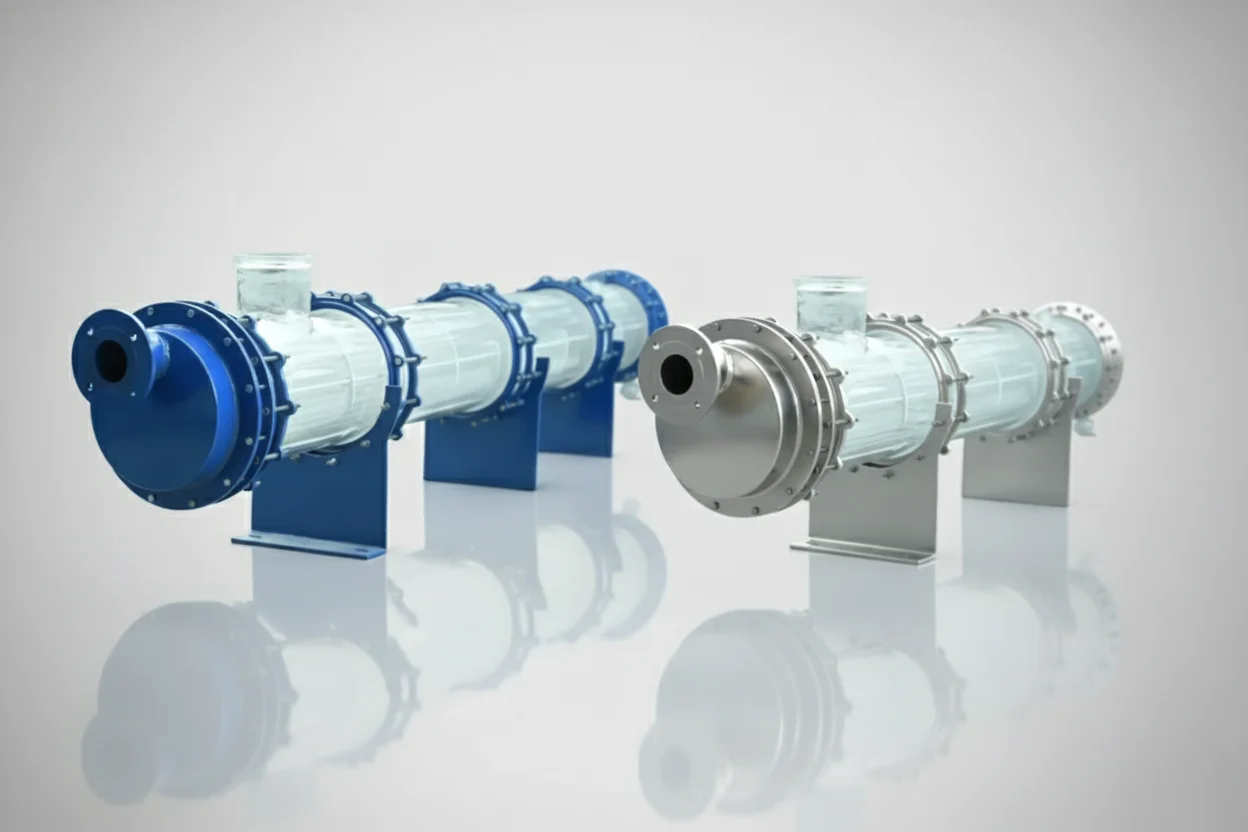
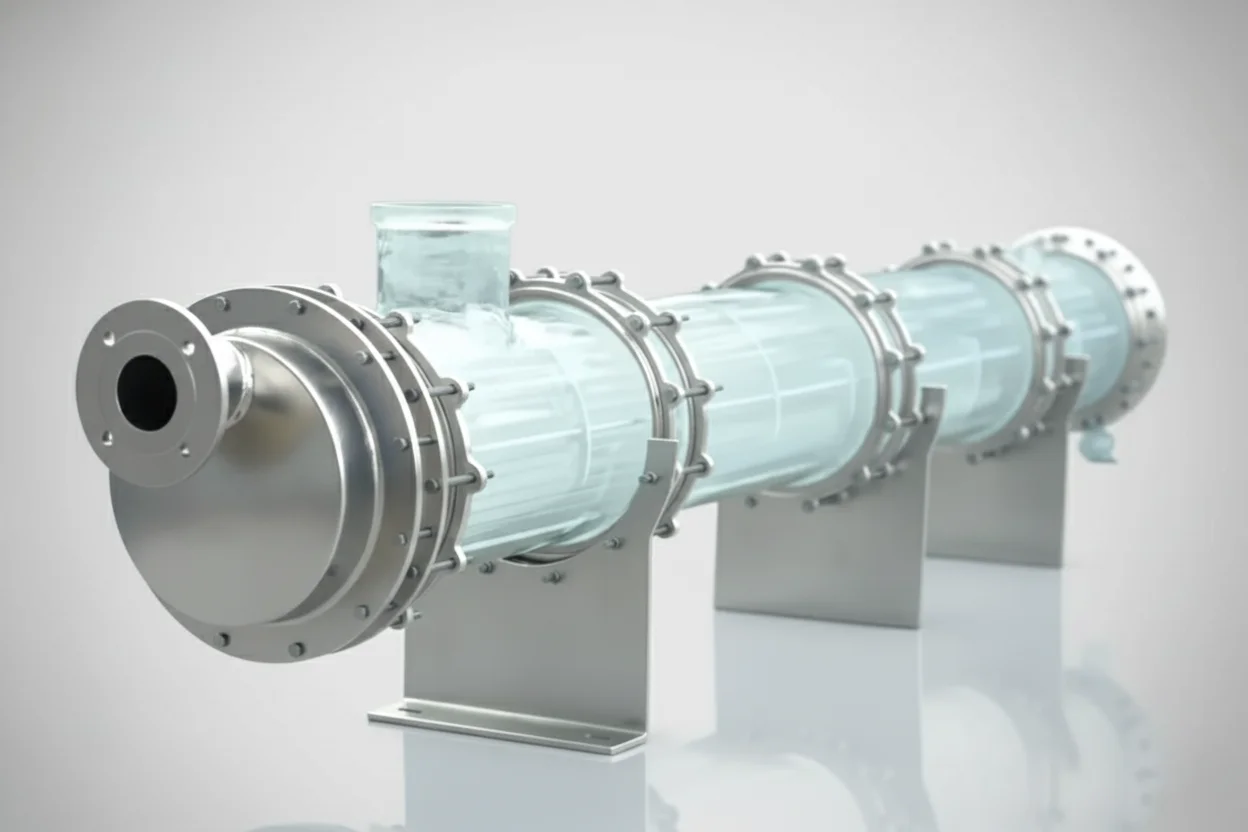
A glass heat exchanger transfers heat between two fluids via conduction across separating materials. The Goel Equipments line includes **conventional coil-type condensers** and **shell & tube** glass heat exchangers. Glass heat exchangers offer key advantages: universal corrosion resistance (avoiding expensive exotic metals), smooth surfaces that resist fouling, flexible installation (vertical or horizontal), ease of maintenance (especially due to replaceable tubes), and compactness for high heat transfer area (HTA) in limited space. Because of their design flexibility and material compatibility, these units suit a variety of process industries requiring aggressive media handling and precise thermal control.

Key Features

  • Borosilicate glass construction
  • High heat transfer efficiency
  • Corrosion resistant
  • Various designs available

Specifications

Key features and typical specs of Goel’s glass heat exchanger line include:

– **Design Types**:  

• Conventional coil-type condensers (glass coils in shell)  

• Shell & tube glass exchangers (glass tubes in shell, with baffles, etc.)

– **Salient Features**:  

• Corrosion resistance across aggressive media  

• Smooth glass surfaces reduce fouling  

• Replaceable tubes for ease of maintenance  

• Variable HTA offerings, lightweight installation, flexible orientation

– **Glass Coil / Condenser Details**:

From the PDF “condensers.pdf,” the condensers are made by fusing a number of parallel glass coils inside a glass shell. – **Shell & Tube Design Specs**:

• **Model Types**: RGG (glass shell / glass tube / glass headers), RGM (glass shell & tube, non-aggressive shell), RMG (non-glass shell, glass tube)

• **Heat Transfer Area & Size Options**: Cataloged in dimensions such as shell diameters (DN150, DN225, DN300), tube count (37, 73, 151), lengths up to ~4.5 m.

• **Pressure & Temperature Ratings**:  – Shell/tube permissible pressures (varies by model, e.g. up to 2–3.5 kg/cm²)  – Temperature difference up to ~120 °C between sides

• **Overall Heat Transfer**: Glass shell & tube designs offer ≈ 3× higher overall coefficient compared to coil types; coil side pressure drop often 2–3 kg/cm² in coil models

• **Construction**: Borosilicate glass tubes (often SCHOTT DURAN), PTFE socket & packing seal designs, ferrule-type seals for easy tube replacement, baffles in shell side to enhance turbulence

These specifications are indicative; final design depends on process conditions, flow rates, and required heat duty, which Goel custom engineers using tools like HTRI.

Applications

Glass heat exchangers are broadly applied in:

– **Chemical processing** where aggressive or corrosive fluids demand inert wetted surfaces 

– **Pharmaceutical / specialty chemicals** for heating, cooling, condensation, and evaporation steps

– **Condensation duties** in vapor–liquid systems, especially with volatile or sensitive components

– **Compact or space-constrained installations** requiring a high HTA per unit footprint

– **Processes requiring frequent cleaning or modular repair**, as coils or tubes can be replaced individually

– **Laboratory and pilot plants** where glass construction aids visual inspection and media compatibility

Select the fields to be shown. Others will be hidden. Drag and drop to rearrange the order.
  • Image
  • SKU
  • Rating
  • Price
  • Stock
  • Availability
  • Add to cart
  • Description
  • Content
  • Weight
  • Dimensions
  • Additional information
Click outside to hide the comparison bar
Compare

Get In touch