




- Keyur Patel
- June 23, 2026
- Gas Scrubber
- 0 Comments
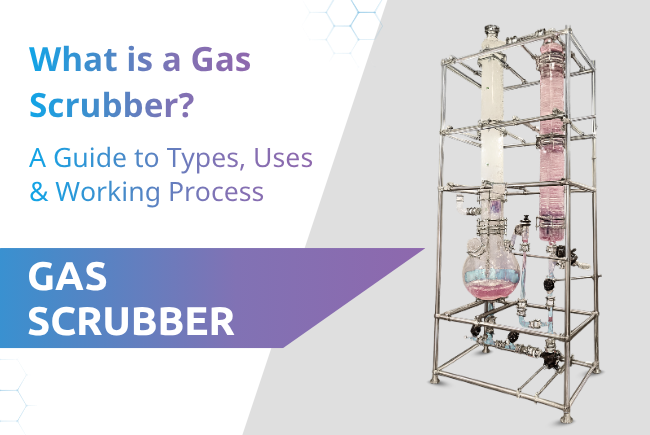
A Gas Scrubber is a pollution-control device that removes harmful gases, vapours, and particulate matter from industrial exhaust streams before they reach the atmosphere. By bringing contaminated gas into close contact with a liquid or solid absorbent, the unit cleans the stream and protects worker safety, and ensures environmental compliance. By knowing how a Gas Scrubber works, you can understand its role in the chemical, pharmaceutical, and petrochemical industries.
Gas Scrubbers in Industrial Systems
Industrial plants often release acidic vapours, toxic gases, and corrosive fumes that must be treated before discharge. Without proper gas cleaning systems, these emissions can damage equipment, affect workplace safety, and create environmental compliance issues. A Gas Scrubber works by passing contaminated gas through a vertical column where it comes in contact with a scrubbing liquid that absorbs or neutralises pollutants. Depending on the application, water, alkaline solutions, or acidic media may be used for effective treatment.
How Does a Gas Scrubber Work?
The working principle of a Gas Scrubber is to maximise contact between polluted gas and the cleaning liquid. Here is how a standard packed-bed scrubber operates:
Contaminated gas enters the scrubber from the bottom of the column.
Scrubbing liquid is sprayed from the top and flows downward.
Internal packing materials create a larger surface area for gas-liquid interaction.
Harmful gases dissolve into the liquid or react chemically with the scrubbing solution.
A mist eliminator removes the liquid drops before the clean gas leaves the system.
Used liquid is collected at the bottom for recycling, treatment, or disposal.
The continuous process helps convert hazardous exhaust into cleaner and safer emissions suitable for discharge.
What is a Scrubber in Oil and Gas?
Gas Scrubbers in oil and gas are used to:
- Maintain the quality of pipeline gas
- Protect the equipment
- Reduce toxic emissions
- Improve plant safety in high-pressure environments
Their ability to operate under harsh industrial conditions makes them valuable in upstream and midstream facilities.
What is a Fuel Gas Scrubber?
A fuel Gas Scrubber is used to clean fuel gas by removing:
- Liquid droplets and hydrocarbons
- Fine solid particles
- Corrosive elements
- Moisture and aerosols
By cleaning the fuel stream, scrubbers reduce equipment wear, improve combustion efficiency, and lower maintenance costs.
Purpose of an Inert Gas Scrubber Tower
Inert Gas Scrubber towers are commonly used in marine systems, chemical storage facilities, and tanker operations. Their main role is to cool and clean inert gases before they are used to blanket storage tanks or cargo spaces. These systems remove soot and excess moisture from flue gases, creating a safer, low-oxygen environment.
Which Gases Are Removed by Gas Scrubbers? Different pollutants require different scrubbing solutions. The effectiveness of a Gas Scrubber depends on selecting the right chemical treatment for the target gas:
Gas / Contaminant | Scrubbing Medium | Reaction Type |
|---|---|---|
Hydrogen chloride (HCl) | Water or dilute caustic | Absorption/neutralisation |
Sulphur dioxide (SO₂) | Alkaline solution (NaOH, lime) | Acid-base neutralisation |
Hydrogen sulphide (H₂S) | Caustic or amine solution | Chemical absorption |
Ammonia (NH₃) | Dilute sulphuric acid | Acid-base neutralisation |
Chlorine (Cl₂) | Sodium hydroxide solution | Chemical reaction |
VOC vapours | Activated carbon or oil absorbent | Physical absorption |
The above table shows that proper chemical compatibility is essential for efficient gas treatment.
Common Types of Gas Scrubbers
Different Gas Scrubbers are designed to match the gas flow, particle loading, and the contaminant’s chemistry:
Type | Working Method | Best Suited For |
|---|---|---|
Packed-bed scrubber | Gas passes through packed media | Acidic and alkaline gases |
Spray tower | Liquid is sprayed into the rising gas | Soluble gases and dust |
Venturi scrubber | High-velocity gas-liquid contact | Fine particulate removal |
Plate or tray scrubber | Multi-stage gas-liquid contact | High-efficiency gas cleaning |
Wet electrostatic scrubber | Electrostatic particle capture | Aerosols and fine fumes |
At Goel Scientific Glass Works Ltd., we offer packed-bed, spray-tower, and venturi-scrubber configurations with optional accessories, such as recirculation pumps, pH monitors, and mist eliminators, to improve operational efficiency.
Why Gas Scrubbers Are Essential for Safe Operations
Gas Scrubbers play a major role in maintaining safe and compliant industrial operations as they:
- Protect workers from exposure to acidic, alkaline, or toxic gases.
- Prevent corrosion of downstream pipework, fans, and stacks.
- Reduce odour complaints from surrounding communities and improve local air quality.
- Capture valuable by-products for recycling.
- Eliminate fire and explosion risks.
- Support compliance with workplace exposure limits and air quality permits required for plant operation.
A properly designed scrubber improves operational safety and keeps the system running for longer.
Maintenance Tips for Increasing Scrubber Efficiency
Regular maintenance helps ensure the scrubber works properly and prevents unexpected downtime. Important maintenance practices include:
- Checking internal packing for scaling or damage
- Monitoring sudden pressure drop and the flow of liquid
- Cleaning spray nozzles and mist eliminators
- Testing scrubbing liquid pH and chemical concentration
- Checking for pumps, piping, and recirculation systems
Preventive maintenance ensures consistent emission control performance and increases the life of the scrubber, making it cost-efficient.Importance of Custom-Engineered Scrubbers
Standard equipment may not always handle aggressive media efficiently, especially in chemical and pilot-plant applications. With features such as high scrubbing efficiency, transparent construction for visual monitoring, and support for multiple scrubbing media, Goel Scientific Glass Works Ltd.’s Gas Scrubbers deliver dependable performance, easy maintenance, and a long service life.
Conclusion
When you are aware of how a Gas Scrubber works, you can select the right Gas Scrubber based on your plant’s gas composition, operating conditions, and environmental requirements. A proper scrubber system reduces emissions, protects equipment, maintains workplace safety, and meets regulatory standards. Whether used in chemical processing, oil and gas, pharmaceuticals, or manufacturing, Gas Scrubbers remain among the most important systems for modern industrial emissions control.
Explore advanced Gas Scrubber solutions from Goel Scientific Glass Works Ltd. for efficient emission control and dependable long-term industrial performance.
FAQs
What industries commonly use Gas Scrubbers?
Gas Scrubbers are mainly used in chemical processing, pharmaceuticals, oil and gas, power plants, wastewater treatment, and manufacturing industries.
How often should a Gas Scrubber be maintained?
Basic inspections and fluid checks are performed monthly, while complete internal inspections are usually conducted annually.
Can Gas Scrubbers remove odours effectively?
Gas Scrubbers can neutralise odorous gases, such as sulphides and ammonia, using appropriate chemical reagents.
What materials are Gas Scrubbers made from?
Common materials include borosilicate glass, FRP, stainless steel, and specialised alloys, depending on the chemical process and operating conditions.
Are Gas Scrubbers effective against volatile organic compounds (VOCs)?
Water-soluble compounds such as alcohols and aldehydes can be efficiently removed using wet scrubbers. However, less-soluble hydrocarbons may require an oil-based absorbent or adsorption on activated carbon.
