




- Keyur Patel
- July 22, 2026
- Glass Reactor
- 0 Comments
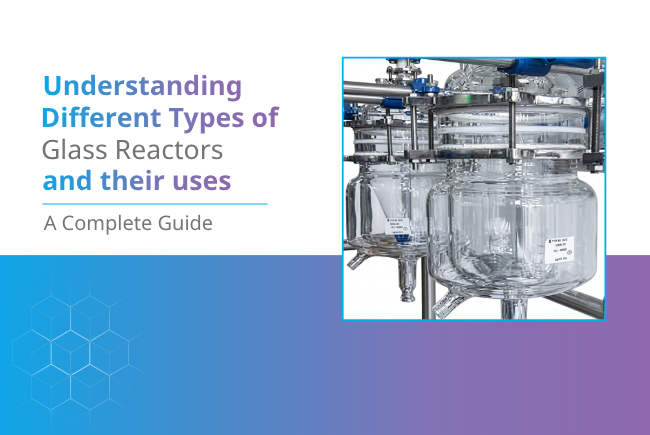
Understanding Different Types of Glass Reactors and Their Uses
Choosing the right reactor is essential for safe and efficient chemical processing. Different types of glass lined reactor systems are designed to handle
varying temperatures, pressures, and chemical reactions across laboratory and industrial applications. A Glass Reactor offers excellent corrosion resistance, high purity standards, and reliable temperature control, making it widely used in pharmaceutical, chemical, and research industries.
Introduction to Glass Reactor Systems
A Glass Reactor is used to perform chemical reactions under controlled conditions. Most reactors are made using borosilicate 3.3 glass, known for its resistance to corrosion, thermal shock, and aggressive chemicals.
These reactors are commonly used in pharmaceutical manufacturing, speciality chemicals, extraction, crystallisation, and pilot-scale production. Their transparent structure also allows operators to monitor reactions easily during processing.
Glass Reactor vs Glass-Lined Reactor: What’s the Difference?
An all-glass reactor is fully made from borosilicate glass and is mainly used in laboratories and pilot plants. It provides complete visibility and is ideal for processes requiring high purity and precise observation.
A glass-lined reactor consists of a steel vessel coated internally with glass. The steel body offers mechanical strength, while the glass lining protects against corrosion. These reactors are preferred for large-scale industrial operations involving pressure and aggressive chemicals.
Understanding different glass lined reactor types helps industries select equipment that matches their production requirements.
Major Types of Glass Reactors
All-glass reactors are classified by the number of walls and the heat-transfer arrangement they provide. The three principal configurations cover laboratory, pilot, and small-scale production work.
1. Single-Wall Glass Reactors
These reactors have a single glass wall and use external heating systems. They are suitable for basic laboratory applications and low-temperature reactions.
2. Double-Wall Jacketed Glass Reactors
Double-layer reactors include an outer jacket that circulates heating or cooling fluid. They are widely used for synthesis, distillation, and extraction processes requiring accurate temperature control.
3. Triple-Wall or Vacuum Jacketed Reactors
These reactors include an additional insulated layer for cryogenic and temperature-sensitive applications. They support stable low-temperature operation over long durations.
Common Types of Glass-Lined Reactors
Common glass-lined reactor types include:
- Bottom-discharge reactors for smooth product removal
- Half-coil jacketed reactors for efficient heat transfer
- Conventional jacketed reactors for general chemical processing
- Agitated filter-dryer reactors combining reaction and filtration.
These reactor systems are commonly used in pharmaceutical and speciality chemical industries.
Applications of Glass and Glass-Lined Reactors
A Glass Reactor is widely used in:
- API and pharmaceutical manufacturing
- Speciality chemical production
- Crystallisation and extraction
- Polymerisation processes
- Pilot-scale research and development
- Corrosive chemical handling
Comparison Table: Choosing the Right Reactor Type
The choice between all-glass and glass-lined construction is driven by scale, pressure, and capital cost.
| Parameter | All-Glass Reactor | Glass-Lined Reactor |
|---|---|---|
| Typical scale | 5 to 500 litres | 50 to 40,000 litres |
| Pressure rating | Atmospheric or modest vacuum | Up to 6 bar typical |
| Visibility | Full visual access | Sight glass only |
| Capital cost | Lower | Higher per litre |
| Typical use | Lab, pilot, small production | Full production scale |
| Repair on damage | Component replacement | Glass re-lining required |
Key Selection Factors for Industrial Processes
When selecting a reactor, industries should consider:
- Operating temperature and pressure
- Chemical compatibility
- Batch size and heat transfer requirements
- Agitation and mixing performance
- Cleaning and maintenance needs
- Regulatory compliance standards
Maintenance and Safety Best Practices
To improve reactor performance and operational safety:
- Inspect glass surfaces regularly for cracks or damage
- Avoid sudden temperature changes
- Use suitable gaskets and fittings
- Conduct routine spark testing for glass-lined vessels
- Maintain agitator seals and bearings properly
Why Material Compatibility Matters in Reactor Design
Material compatibility directly affects product quality and equipment life. Borosilicate 3.3 glass offers high resistance to corrosive chemicals, acids, and solvents, making it ideal for demanding industrial processes. At Goel Scientific Glass Works Ltd., we make industrial Glass Reactor systems ranging from laboratory units to pilot-scale equipment. Their reactors are designed for reliable thermal performance, chemical resistance, and long-term industrial use.
Conclusion
Selecting the right reactor depends on process scale, operating conditions, and chemical compatibility. While all-glass reactors are ideal for laboratory and pilot applications, glass-lined reactors are better suited for large-scale production requiring higher durability and pressure handling. Understanding different types of glass-lined reactor systems helps industries improve process efficiency, safety, and product consistency.
Looking for high-performance Glass Reactor systems for your industrial or laboratory applications? Explore customised reactor solutions from Goel Scientific Glass Works Ltd.
Frequently Asked Questions
FAQs
1. What are the main types of glass-lined reactors?
The main types include bottom-discharge reactors, half-coil jacketed reactors, conventional jacketed reactors, and agitated filter-dryer reactors.
2. Why choose glass-lined reactors over stainless steel?
Glass-lined reactors offer the chemical inertness of borosilicate glass while retaining the mechanical strength and pressure rating of a steel pressure vessel. They resist attack from acids, halogenated compounds, and other aggressive media that would corrode stainless steel.
3. What is the typical glass lining thickness?
Industrial glass linings are typically applied at thicknesses between 1.0 and 2.5 millimetres, built up over multiple firings to give the required chemical resistance and mechanical integrity.
4. How is the integrity of glass-lining tested?
Glass lining integrity is verified by high-voltage spark testing. A probe is moved across the entire internal surface while a controlled voltage is applied. Any defect in the lining causes a spark to ground, identifying the location for repair before the vessel enters service.
5. Which industries benefit most from glass-lined reactors?
Pharmaceutical and active ingredient manufacture, agrochemical synthesis, specialty chemical production, dye and pigment manufacturing, food and flavour processing, and any operation involving corrosive media at production scale all benefit from glass-lined reactor technology.
6. How to select the right glass-lined reactor for a process?
Selection begins with the process data: operating temperature and pressure, batch size, chemistry, and cycle time. From this, the appropriate volume, jacket configuration, agitator design, and nozzle pattern are specified.
What industries commonly use Gas Scrubbers?
Gas Scrubbers are mainly used in chemical processing, pharmaceuticals, oil and gas, power plants, wastewater treatment, and manufacturing industries.
How often should a Gas Scrubber be maintained?
Basic inspections and fluid checks are performed monthly, while complete internal inspections are usually conducted annually.
Can Gas Scrubbers remove odours effectively?
Gas Scrubbers can neutralise odorous gases, such as sulphides and ammonia, using appropriate chemical reagents.
What materials are Gas Scrubbers made from?
Common materials include borosilicate glass, FRP, stainless steel, and specialised alloys, depending on the chemical process and operating conditions.
Are Gas Scrubbers effective against volatile organic compounds (VOCs)?
Water-soluble compounds such as alcohols and aldehydes can be efficiently removed using wet scrubbers. However, less-soluble hydrocarbons may require an oil-based absorbent or adsorption on activated carbon.
