




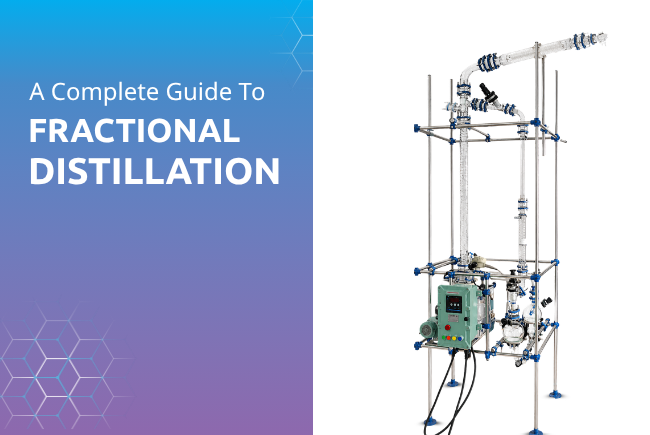
Industries that handle high-purity chemicals and refined products rely on separation processes capable of handling complex liquid mixtures. Fractional distillation plays an important role in achieving this in sectors such as petroleum refining, pharmaceuticals, and chemical manufacturing. Understanding what fractional distillation is and how it improves product quality and enables accurate component separation offers insight into why it is one of the most widely used industrial techniques today.
Understanding Fractional Distillation
Fractional distillation is a process used to separate liquid components with different but closely spaced boiling points. The mixture is heated in an apparatus and undergoes successive condensation and re-evaporation. The component with the lower boiling point reaches the top of the column first and passes through to the condenser, while the higher-boiling component remains in the lower section. It results in a series of progressively purer fractions that can be collected separately.
How Does Fractional Distillation Work?
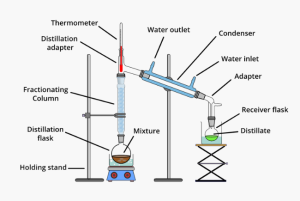
The main principle of fractional distillation is that different liquids boil and evaporate at different temperatures. It works across the following steps:
- The liquid mixture is placed inside an apparatus and heated to its boiling point.
- The lighter components vaporise first.
- As vapour rises through the fractionating column, partial condensation starts.
- Heavier fractions fall back into the pot while lighter fractions continue upward.
- The condensed liquid returning down the column meets fresh vapour rising, creating vapour-liquid equilibrium stages.
- Pure vapour reaches the top of the column, enters the condenser, and is collected as the distillate.
- Heavier residue is drained separately, and the components are separated.
Through repeated interactions between the liquid and vapour phases, fractional distillation helps industries achieve higher purity levels.
Main Components of a Fractional Distillation Apparatus
The working of the Fractional Distillation Unit depends on multiple components that operate together to achieve accurate separation and high-purity distillation:
The Fractional Distillation Units from Goel Scientific Glass Works Ltd. are available in capacities ranging from 20 L to 500 L and feature modular designs, reflux control systems, PTFE seals, and high-efficiency condensers.
Simple Distillation vs Fractional Distillation
The two methods work on the same fractional distillation principle but differ in terms of the equipment used and the types of mixtures they can separate.
Based on the differences mentioned above, simple distillation is preferred for separating liquids with large boiling-point differences, whereas fractional distillation is more suitable for mixtures requiring higher-purity separation.
Fractional distillation plays a crucial role in industries that require the precise separation of liquid mixtures and the production of high-purity products. Some of the common industrial applications include:
- Separation of crude oil into different fractions and purification of hydrocarbon mixtures
- Purification of solvents, pharmaceutical ingredients, and sensitive chemical compounds
- Fractionation of a multicomponent mixture
- Recovery of solvents such as ethanol, methanol, and acetone from industrial waste
- Separation and purification of aromatic compounds and essential oils.
At Goel Scientific Glass Works Ltd., we design advanced Fractional Distillation Units to support efficient separation processes in laboratory, pilot-scale and industrial environments.
Safety Precautions in Fractional Distillation
Since fractional distillation involves working with liquid components and flammable substances at high temperatures, the following safety precautions are essential:
- Use only glassware rated for the process’s operating temperature and pressure.
- Ensure adequate ventilation and run flammable solvents inside a fume hood.
- Check ground-glass joints for leakage before starting, especially under vacuum.
- Monitor the heating mantle or oil bath continuously and avoid overheating.
- Use boiling chips or stirring to prevent bumping in the still pot.
- Keep fire-fighting equipment accessible when distilling flammable liquids.
- Drain residues into approved containers and never heat dry stills.
At Goel Scientific Glass Works Ltd., we provide high-quality laboratory and industrial Fractional Distillation Units to minimise process risks while ensuring pure separation outcomes and maintaining operational efficiency.
Why Precision Equipment Matters
To fully understand what fractional distillation is and how effective it is, it depends on the equipment you select. Various equipment and Borosilicate 3.3 glass columns, accurately fitted joints, and well-engineered packing make the difference between a unit that delivers consistent results and one that hinders production. Goel Scientific Glass Works Ltd. has been manufacturing scientific glass distillation equipment since 1977 and supplies fractional distillation columns, condensers, and complete assemblies engineered for chemical, pharmaceutical, and research applications. Each system is altered to the client’s process data and tested before dispatch to ensure reliable long-term performance.
Conclusion
Fractional distillation remains the most reliable separation technique for liquid mixtures whose components have boiling temperatures close to one another. Its use across petroleum refining, pharmaceutical synthesis, and speciality chemical manufacturing enables the industry to produce pure materials at a commercial scale. As process demands grow and feedstocks become more complex, investing in well-engineered fractional distillation equipment is one of the most direct ways to improve product quality and maintain consistent output.
For reliable and precision-engineered Fractional Distillation Units, connect with Goel Scientific Glass Works Ltd. for solutions tailored to your industrial process requirements.
FAQs
What types of liquids can be separated using fractional distillation?
Fractional distillation is suited for mixtures that have boiling points within a few degrees of one another, such as petroleum cuts, mixed alcohols, and organic solvent blends used in pharmaceutical and chemical processing.
How does the fractionating column improve separation efficiency?
The fractionating column increases the number of vapour-liquid equilibrium stages, and each stage enriches the more volatile component as taller columns deliver purer fractions.
What is the difference between fractional and simple distillation?
Simple distillation uses a single vaporisation-condensation step and works when components have widely different boiling points. Fractional distillation uses a packed column and allows the separation of liquids whose boiling points differ by just a few degrees.
Can fractional distillation be used for mixtures with large boiling point differences?
For mixtures with wide boiling-point gaps, simple distillation is usually more cost-effective. However, fractional distillation is preferred when boiling points are close together, and a single equilibrium stage cannot achieve the required purity.
What safety precautions are necessary during fractional distillation?
Use glassware rated for the operating conditions, check all joints for leakage before startup, run flammable solvents under controlled ventilation, monitor heating sources continuously, and dispose of residues through approved channels.
