




- GOEL Scientific
- October 21, 2026
- Coupling & Gasket
- 0 Comments
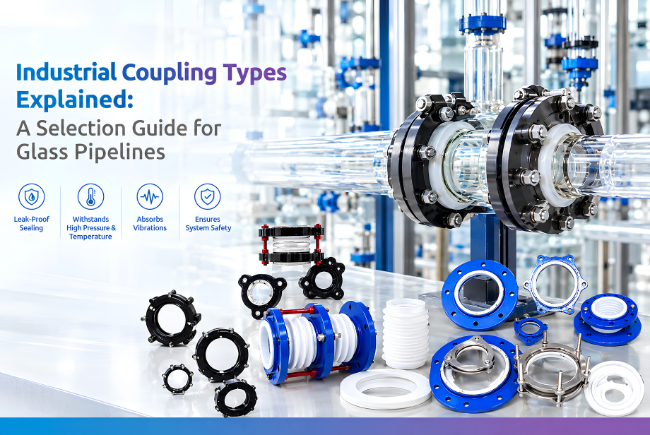
Imagine building a chemical processing line out of high-purity glass, only to experience micro-fractures or joint leaks a few weeks into operation. In industrial processing plants, glass piping systems offer unmatched transparency and corrosion resistance. However, because glass is rigid and has near-zero yield strength, the mechanical components holding those pipe sections together must perform flawlessly. Selecting the correct industrial coupling is not just about keeping two pipe ends attached; it is about sealing aggressive reagents, absorbing system vibrations and accommodating thermal expansion without crushing the glass. This industrial coupling selection guide breaks down the primary connector designs, material choices and key criteria for building safe, leak-proof glass pipelines.
Why Choosing the Right Industrial Coupling Matters in Glass Process Plants
Glass piping operates under strict mechanical limits. Unlike steel or plastic pipes that flex or stretch under mechanical stress, borosilicate glass transfers external mechanical loads directly into the material structure. Improper connector installation creates localised stress points that can lead to sudden fracture, catastrophic chemical spills and immediate plant downtime.
A properly specified industrial coupling provides three essential functions:
- Mechanical Alignment: Holds glass pipe ends in precise axial alignment without exerting uneven clamping forces.
- Leak-Proof Sealing: Maintains positive-pressure or deep-vacuum tightness across wide temperature ranges.
- Stress Isolation: Acts as a mechanical cushion that isolates the brittle glass wall from pump vibrations, thermal growth and structural movement.
Classifying Coupling Types for Pipelines
Understanding the main coupling types for pipelines starts with deciding how much movement the joint must allow. Pipe joinery falls into two primary structural categories: rigid connectors and flexible assemblies.
| Feature | Rigid Pipe Connectors | Flexible Pipe Couplings |
| Axial Movement | None | High; absorbs thermal expansion |
| Angular Deflection | Minimal, usually <1° | Moderate, typically 3°–5° |
| Vibration Dampening | Low | Superior |
| Primary Application | Straight, fixed pipe runs | Pump connections and long pipe runs |
| Sealing Component | Flat gasket or O-ring | Multi-convoluted PTFE bellows |
1. Rigid Glass Pipeline Connectors
Rigid glass pipeline connectors use backing flanges, inserts and flat compression gaskets to clamp two conical or spherical glass pipe ends together. They are ideal for vertical distillation columns, fixed support frames and short, straight pipe runs where structural stability is mandatory. Because rigid couplings transfer physical loads directly down the assembly line, accurate pipe alignment during setup is essential to prevent joint binding.
2. Flexible Pipe Couplings
Flexible pipe couplings incorporate multi-convoluted PTFE bellows or elastomeric sleeves between the pipe ends. As process temperatures rise, glass and metal frame materials expand at different rates. Flexible connectors absorb this thermal growth, compensate for minor angular misalignments and isolate delicate glass components from heavy pump vibrations. Installing flexible joints at regular intervals along long horizontal lines protects the entire piping system from structural fatigue.
Specialised Industrial Coupling Applications in Chemical Processing
Matching connector materials to your specific fluid profile prevents premature gasket degradation and joint failure in demanding pipeline coupling applications.
Back-up Flanges and Cushioning
Glass flanged ends cannot withstand direct bolt-clamping force. Connectors rely on split backing flanges, crafted from cast iron, mild steel or stainless steel, fitted over protective inserts. Rubber or asbestos-free plastic cushions sit between the metal flange and the glass shoulder, distributing bolt torque evenly around the glass circumference to eliminate point-loading fractures.
PTFE-Lined Industrial Couplings
In highly corrosive processing environments that handle concentrated acids, halogens or organic solvents, internal gasket materials must match the glass’s chemical inertness.
- PTFE Gaskets & Envelopes: Provide near-universal chemical inertness, preventing media degradation and process contamination.
- PTFE Bellows: Allow multi-directional movement while keeping reactive fluids away from metallic outer flanges.
- Temperature Stability: Maintain structural sealing performance from ambient temperatures up to 200°C.
To support these demanding chemical operations, Goel Scientific Glass Works Ltd. manufactures precision borosilicate 3.3 pipeline components, high-purity PTFE bellows and engineered coupling assemblies. Designed to conform to international flange standards like DIN and ASA 150, Goel Scientific coupling systems deliver vacuum continuity, stress-free mounting and reliable sealing across chemical synthesis plants, pharmaceutical pilot units and industrial R&D facilities.
Industrial Coupling Selection Guide
Use this checklist when specifying connectors for your plant layout:
| Selection Factor | Operational Evaluation | Design Requirement |
| 1. Process Media | Is the fluid acidic, caustic or solvent-heavy? | Specify PTFE gaskets or full PTFE envelope seals. |
| 2. System Pressure | Will it operate under deep vacuum or positive pressure? | Select full-face backing flanges with high-durometer seals. |
| 3. Temperature Range | Will the joint experience thermal cycling? | Incorporate flexible PTFE bellows to absorb thermal growth. |
| 4. Structural Movement | Is the pipeline linked to rotating equipment (pumps)? | Use flexible pipe couplings to isolate mechanical vibration. |
| 5. Mating Interfaces | Connecting glass-to-glass or glass-to-metal? | Ensure flange bolt-hole patterns match ASA or DIN specs. |
Installation Best Practices for Glass Pipeline Connectors
Even the best-engineered connector will fail if installed incorrectly. Follow these standard installation practices:
- Inspect Glass Beads: Examine glass pipe ends for chips, scratches or manufacturing variations before mounting gaskets.
- Insert Cushioning Sleeves: Always place protective insert collars between metallic backing flanges and glass shoulders.
- Use Cross-Pattern Torquing: Tighten flange bolts incrementally in a star or cross pattern using a calibrated torque wrench. Never exceed recommended torque values.
- Verify Axial Alignment: Ensure pipe ends meet straight; pulling misaligned glass pipes together using flange bolts introduces severe bending stress.
Maintenance and Inspection
Regular preventive maintenance ensures long-term joint integrity in critical pipeline coupling applications:
- Visual Leak Checks: Inspect joints routinely for signs of weeping, localised salt buildup or gasket distortion.
- Monitor Thermal Cycling Effects: Check flange bolt tightness after initial thermal commissioning, as temperature changes can cause initial gasket relaxation.
- Inspect External Corrosion: Ensure metal backing flanges in washdown areas maintain their protective epoxy coatings to prevent rust buildup.
Conclusion
Selecting the right industrial coupling is essential to maintain process safety, chemical purity and long-term equipment service life in glass piping networks. Balancing rigid stability with flexible movement ensures your plant handles thermal expansion and mechanical vibration without risking glass breakage.
Goel Scientific Glass Works Ltd. provides a complete range of borosilicate 3.3 glass pipeline components, engineered PTFE couplings, backing flanges and flexible bellows tailored to your operational parameters. Contact our technical engineering team today to request a custom coupling catalogue or discuss your plant’s connection requirements.
FAQs
Use a specialised metal-to-glass adaptor flange fitted with a PTFE envelope gasket and flexible PTFE bellows. The bellows isolates the glass line from mechanical vibrations, thermal expansion forces and structural loads generated by the metal piping system.
Gasket selection depends on process fluid compatibility and operating temperature. PTFE envelope gaskets are the standard choice for aggressive chemicals and high purity, while elastomeric cores add compressibility for low-torque sealing.
Yes. When paired with precision-ground glass ends, PTFE gaskets and uniform flange clamping, glass couplings maintain vacuum tightness down to fine vacuum levels.
Visual inspections should occur weekly during routine plant walk-throughs, with full bolt-torque verification performed during scheduled quarterly or semi-annual maintenance shutdowns.
Directly bolting metal components against glass creates point-load stresses that crack the vessel. A backing flange sits behind the glass shoulder over a cushioned insert, distributing bolt torque evenly around the glass circumference.
