




- GOEL Scientific
- October 1, 2026
- Temperature Control Unit
- 0 Comments
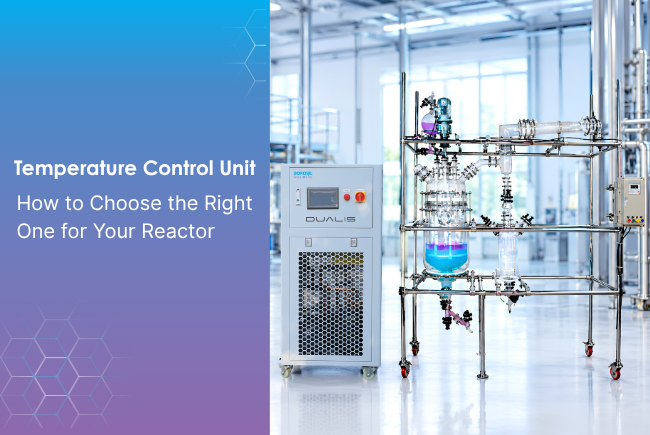
A single unhandled thermal spike during an exothermic batch reaction can degrade sensitive active pharmaceutical ingredients, create unwanted side products or shatter an expensive reactor vessel. In chemical synthesis and pharmaceutical manufacturing, maintaining exact reaction kinetics requires rapid, highly repeatable thermal adjustments. A temperature control unit serves as the central engine regulating these thermal shifts. Matching the right control system to your vessel preserves batch quality, protects process equipment and ensures workplace safety.
What is a Reactor Temperature Control System and Why is it Critical?
A reactor temperature control system is an integrated fluid-circulating unit designed to heat, cool and maintain steady process temperatures inside a jacketed vessel. Rather than relying on separate steam lines and cold water baths, a modern unit pumps a liquid heat-transfer medium through the reactor jacket in a continuous, closed loop.
Direct advantages of a dedicated control system include:
- Isothermal Reaction Maintenance: Keeps reaction temperatures constant within fractions of a degree, preventing thermal runaway.
- Repeatable Batch Yields: Eliminates batch-to-batch variation caused by manual utility valve adjustments.
- Protected Equipment: Regulates fluid ramp rates to prevent sudden thermal stress on vessel walls.
- Reduced Energy Waste: Uses closed-loop fluid recycling instead of continuously discharging cooling water.
Types of Industrial Temperature Control Equipment
Selecting the right industrial temperature control equipment depends on whether your process requires simple single-stage heating, deep sub-zero chilling or dynamic multi-stage thermal cycling.
- Single-Fluid Dynamic Systems: Utilise a single thermal fluid across the entire operating range (for example, -80°C to +250°C), eliminating the need to flush jackets when switching between heating and cooling cycles.
- Thermal Fluid Heating Systems: Electric or steam-driven units designed specifically to heat organic oil media up to high temperatures for distillation and cracking processes.
- Recirculating Chillers: Specialised cooling units optimised for removing process heat during exothermic additions or cold-crystallisation steps.
- Dual-Zone Temperature Units: Feature independent fluid circuits to control two separate jackets or process stages simultaneously from a single skid.
How to Size a TCU
Correct temperature control unit selection requires evaluating three core variables: thermal load, pump hydraulics and fluid chemistry. Oversizing a unit causes excessive energy draw and hunting temperature oscillations, while undersizing leads to sluggish response times and uncontrolled exotherms.
1. Calculating Thermal Load and Heating/Cooling Power
Sizing begins by determining the total thermal energy required to heat or cool the vessel mass, the liquid charge and the reaction enthalpy within a set timeframe.
Q = [(m x Cp x 𝚫T) / t] + Qreaction
where:
- Q = Total thermal load required (kW)
- m = Mass of the reaction mixture and inner vessel (kg)
- Cp = Specific heat capacity of the mixture (kJ/kg·°C)
- 𝚫T = Temperature difference between starting and target point (°C)
- t = Desired heating or cooling time (seconds)
- Qreaction = Heat generated or absorbed by the chemical reaction (kW)
2. Pump Capacity: Flow Rate vs Pressure
The circulation pump inside the control unit must deliver sufficient velocity to ensure turbulent fluid flow (Re > 4000) inside the reactor jacket for maximum heat transfer.
- Flow Rate (L/min): Higher flow rates reduce the temperature differential between the jacket inlet and outlet, promoting uniform internal vessel temperatures.
- Delivery Pressure (bar): Glass reactor jackets have strict internal pressure limits (0.5 bar maximum). The pump must supply high flow without exceeding the glass jacket’s mechanical pressure limits.
3. Understanding Temperature Range and Thermal Fluid Selection
Matching the circulating fluid to your operating temperature limits ensures efficient heat transfer and long fluid life.
| Temperature Range | Recommended Thermal Fluid | Key Characteristics |
| -80°C to +40°C | Silicone oil (Low viscosity) | Remains fluid at deep sub-zero limits; low flash point |
| -20°C to +180°C | Water-Glycol mixtures | High heat capacity; low cost; non-flammable |
| +20°C to +200°C | Deionised water (Pressurised) | Excellent thermal transfer; limited to closed pressure loops |
| +50°C to +350°C | Synthetic HT thermal oils | High flash point; low vapour pressure at extreme heat |
An advanced thermal fluid heating system utilises sealed expansion tanks to isolate hot thermal fluid from atmospheric oxygen, preventing oil oxidation and extending fluid service life.
Protecting Glass Reactors from Thermal Shock
Borosilicate 3.3 glass reactors provide complete process visibility and universal chemical resistance, but they require careful thermal management. Subjecting a glass vessel to a sudden temperature difference (𝚫T) between the jacket fluid and the internal reaction mass creates intense mechanical stress.
𝚫TMax ≤ Safe Limit (40°C to 50°C for glass)
To protect glass vessels, Goel Scientific Glass Works Ltd. recommends pairing glass reactors with advanced heating-cooling circulators. The Dualis series from Goel Scientific Glass Works Ltd. incorporates feedforward PLC controls, PT100 temperature sensors and real-time curve tracking to automatically govern jacket temperature ramps. This keeps the temperature differential within safe limits, preventing thermal shock while maintaining exact reaction kinetics.
Managing Exothermic Reactions with Precision TCUs
In active pharmaceutical ingredient (API) synthesis, exothermic additions present significant safety risks. As a reactive reagent enters the vessel, reaction heat spikes instantly.
A basic temperature controller reacts only after the internal sensor detects a temperature rise. A high-performance unit uses cascade control, simultaneously monitoring the internal process temperature and the jacket fluid temperature. When an exotherm begins, the controller rapidly cools the jacket fluid before internal vessel temperatures exceed target safety thresholds.
Common TCU Applications in Pharma and Chemical Synthesis
Modern units support diverse TCU applications across research, testing and production:
- Kilo-Lab & Pilot Plant Reactors: Precise thermal cycling across multi-step organic synthesis campaigns.
- Crystallisation Control: Slow, linear cooling ramps to grow uniform crystal structures without unwanted nucleation.
- Distillation & Reflux Systems: Maintaining steady jacket temperatures during high-vacuum fractionations.
- Peptide Synthesisers: Regulating low-temperature coupling reactions to avoid racemisation.
- Material Stress Testing: Thermal simulation testing for speciality chemicals and aerospace materials.
A 5-Step Temperature Control Unit Selection Guide
Follow this systematic checklist when selecting a control system for your facility:
- Map Your Temperature Limits: What minimum cooling and maximum heating limits does your chemistry require?
- Calculate Total Heat Load: Account for fluid volume, vessel weight, agitator energy input and reaction enthalpy.
- Check Vessel Pressure Limits: Ensure maximum pump pressure output does not exceed the reactor jacket’s pressure rating.
- Verify Fluid Compatibility: Select a thermal fluid that operates across your full temperature range without boiling, freezing or decomposing.
- Evaluate Control Interfaces: Ensure the controller supports digital interfaces (RS485, USB, PLC) for automated data logging and remote monitoring.
Conclusion
Achieving safe, efficient chemical synthesis requires complete harmony between your reactor vessel, agitator assembly and temperature controller. Mismatched components increase thermal response lag, raise energy consumption and risk equipment damage.
Goel Scientific Glass Works Ltd. offers engineered glass reactor packages integrated with advanced industrial heating and cooling systems. By combining high-purity borosilicate 3.3 glass vessels with precision thermal control units, chemical plants and research labs achieve safe, highly repeatable process control across every batch. Contact our technical engineering team today to discuss your reactor specifications or request a custom thermal sizing consultation.
FAQs
A recirculating chiller is designed primarily to remove heat and maintain low temperatures. A Temperature Control Unit (TCU) provides both high-temperature heating and low-temperature cooling within a single closed fluid circuit, enabling dynamic thermal cycling across a wide operating range.
The system heats a specialised liquid medium (such as silicone oil) and pumps it continuously through the vessel's outer jacket. Heat transfers across the inner glass or metal wall into the reaction mass via conduction.
"Delta T" (𝚫T) refers to the temperature difference between the fluid in the reactor jacket and the reaction mass inside the vessel. For glass reactors, keeping 𝚫T under 50°C is vital to prevent thermal shock and structural cracking.
Cooling capacity must equal the sensible heat removal rate plus the peak heat release rate of the chemical reaction (Qreaction). Process safety screening tools like Reaction Calorimetry (RC1) help measure heat release rates before sizing industrial units.
While possible using multi-zone manifold systems, connecting one unit to multiple reactors makes individual temperature control difficult. For precise batch reactions and independent thermal profiles, best practice is to assign a dedicated control unit to each reactor.
