




- GOEL Scientific
- September 7, 2026
- Borosilicate Glass
- 0 Comments
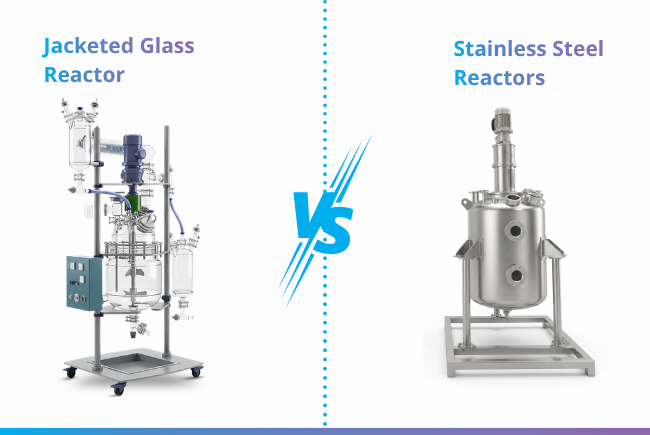
Choosing the right reactor material is an important decision in chemical plant design. The vessel must suit the process chemistry, pressure, temperature, purity and batch size. When comparing a glass reactor vs stainless steel reactor, engineers typically assess chemical resistance, mechanical strength, process visibility, cleaning and operating conditions.
Borosilicate glass and 316L stainless steel each have specific advantages. Stainless steel is suited to high-pressure and large-volume applications, while glass offers excellent chemical resistance, low risk of metal contamination and direct process visibility. The right choice depends on the application rather than one material being universally better.
Glass vs Stainless Steel in Chemical Processes
Material compatibility should be one of the first factors considered during reactor selection.
Borosilicate 3.3 glass offers strong resistance to many acids, solvents and corrosive process media. It is particularly suitable for processes involving hydrochloric acid, nitric acid, sulphuric acid and many organic solvents. However, hydrofluoric acid and strong hot alkalis can attack glass and must be assessed carefully.
316L stainless steel performs well with many neutral and mildly corrosive process fluids. However, chloride-containing media, strong acids and some halogenated chemicals can cause pitting, corrosion or stress corrosion cracking. More resistant alloys such as Hastelloy can be used for demanding applications, but they increase equipment costs.
Glass also reduces the risk of product contamination from metal contact. This can be important in pharmaceutical and speciality chemical manufacturing where elemental impurities must be controlled.
| Material Property | Borosilicate 3.3 Glass | 316L Stainless Steel |
| HCl resistance | Excellent | Limited in many conditions |
| H₂SO₄ resistance | Excellent at suitable temperatures/concentrations | Application dependent |
| HF resistance | Poor | Application dependent |
| Metal contamination | Very low risk from glass surface | Trace metal ions may be present |
| Pressure capability | Limited compared with metal | High |
| Process visibility | Direct | Not available through vessel wall |
A qualified glass reactor manufacturer can help match glass composition, vessel design and operating conditions to the process.
Why Glass Is Used in Pharmaceutical Process Plants
When selecting the best reactor for pharmaceutical process plant applications, product purity and chemical compatibility are major considerations.
API manufacturing may involve acids, solvents, halogenated compounds and other aggressive reagents. Metal vessels can contribute trace elements such as iron, chromium or nickel to the process stream. These risks need to be evaluated against the product specification and applicable elemental impurity requirements.
A glass reactor provides a non-metallic process-contact surface and can reduce the risk of metal-derived contamination. Borosilicate glass is also widely used because its smooth surface supports cleaning and inspection.
Glass provides another practical advantage during cleaning and validation. Its transparency allows operators to inspect the vessel for visible residues, deposits and fouling. This visual inspection complements established cleaning validation procedures rather than replacing them.
For pharmaceutical applications, a jacketed glass reactor is often used because it combines controlled temperature management with process visibility.
Advantages of an Industrial Glass Reactor for Chemical Plants
An industrial glass reactor for chemical plant operations allows operators to observe the process directly. This can be useful when visual changes provide information about the reaction.
- Phase Changes: Operators can observe liquid-liquid separation, gas evolution, foaming and other visible process changes.
- Crystallisation: Crystal formation, growth and endpoint behaviour can be monitored without opening the vessel.
- Colour Changes: Unexpected colour changes can indicate decomposition, side reactions or changes in process conditions.
- Fouling: Deposits, scaling and material build-up on the vessel wall are easier to identify through the transparent surface.
This visibility can improve process control and help operators respond quickly to abnormal conditions.
Temperature Control with a Jacketed Glass Reactor
Temperature control is critical in exothermic, endothermic and temperature-sensitive reactions.
A jacketed glass reactor uses a surrounding jacket through which heating or cooling media circulates. This helps maintain the required process temperature while allowing operators to monitor the reaction.
Glass has lower thermal conductivity than stainless steel, but reactor design and wall thickness can be optimised to achieve effective heat transfer. Depending on the design, specialised glass reactor systems can also support low-temperature applications.
The required temperature range, heat-transfer medium, batch volume and heating or cooling duty should be considered before selecting the reactor.
Choosing a Glass Reactor Manufacturer India
Selecting a reliable glass reactor manufacturer in India requires more than comparing vessel prices. Consider the manufacturer’s experience with borosilicate glass systems, reactor sizes, pressure and vacuum design, heating and cooling requirements and custom fabrication capabilities.
For pilot-scale operations, it is also important to assess scale-up support and equipment flexibility. A suitable pilot plant glass reactor supplier in India should be able to provide systems that support process development, testing and transition towards larger production equipment.
Goel Scientific Glass Works Ltd. manufactures borosilicate 3.3 glass reactors for industrial and pilot applications. Its range includes custom-engineered systems designed around process requirements, vessel capacity, operating conditions and plant configuration.
How to Choose the Right Reactor
Before selecting a reactor, review the following factors:
- Process chemistry: Identify acids, solvents, halogens, chlorides and other chemicals that may affect the vessel material.
- Purity requirements: Determine whether metal contamination or elemental impurities could affect the final product.
- Pressure and vacuum: Confirm whether the process requires atmospheric operation, vacuum, low positive pressure or high-pressure service.
- Batch volume: Match the reactor capacity to current production needs and future scale-up requirements.
- Temperature range: Consider heating, cooling and thermal control requirements.
- Process visibility: Determine whether monitoring phase separation, crystallisation, foaming or colour changes is important.
Conclusion
The choice between a glass reactor vs stainless steel reactor depends on the chemistry, pressure, temperature, purity and scale of the process.
Borosilicate glass is well suited to corrosive chemistry, pharmaceutical processing and applications where product visibility and low metal-contact risk are important. Stainless steel is generally more suitable for high-pressure, heavy-duty and very large-scale applications.
Choosing the right glass reactor manufacturer is equally important. A manufacturer with suitable design, fabrication and scale-up capabilities can help ensure that the reactor matches the process and plant requirements.
FAQs
A glass reactor offers strong resistance to many corrosive chemicals, direct process visibility and a non-metallic product-contact surface. It is widely used for pharmaceutical and speciality chemical processes.
Yes, a jacketed glass reactor supports controlled heating and cooling, making it suitable for many temperature-sensitive processes, provided the reactor is correctly designed for the required operating range.
Glass provides a non-metallic contact surface, good chemical resistance and direct visibility of the process. These features can support purity control, cleaning and process monitoring.
Standard glass reactors have limited positive-pressure capability compared with stainless steel. High-pressure applications generally require specially designed pressure vessels or suitable metal reactors.
Evaluate the supplier's experience with borosilicate glass equipment, customisation capability, reactor range, thermal systems, vacuum design and technical support for pilot-scale and scale-up requirements.
