




- GOEL Scientific
- September 14, 2026
- Glass Reactor
- 0 Comments
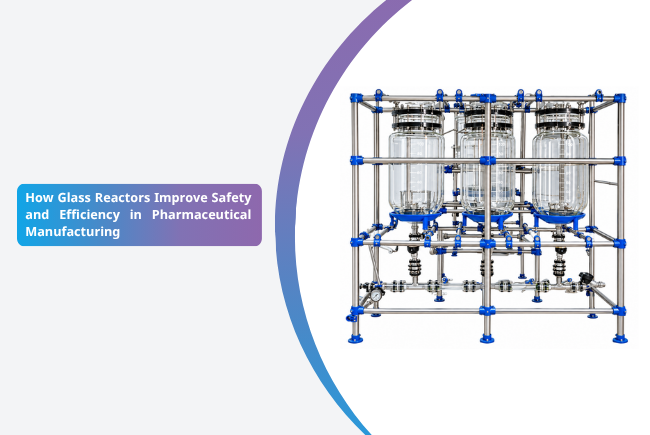
In pharmaceutical manufacturing, precise control over temperature, contamination and reaction conditions is essential for consistent API quality. Traditional metal vessels can limit visibility during sensitive reactions, making it harder to identify changes such as unexpected colour, foaming or phase separation. A chemical glass reactor addresses this challenge by combining process visibility with the chemical resistance of high-purity borosilicate 3.3 glass.
Modern reactor systems for pharma industry applications support safer processing, easier inspection and better control from laboratory development to pilot production. With the right reactor configuration, manufacturers can improve process reliability while maintaining quality and regulatory requirements.
How Glass Reactors Improve Process Safety
One of the main advantages of a glass reactor vessel is direct visibility of the reaction. Operators can monitor changes during key process stages and respond quickly when conditions differ from the expected profile.
Key safety benefits include:
- Early detection of process changes: Colour changes, gas evolution, foaming and unexpected reactions can be identified without opening the vessel.
- Better control during chemical addition: Operators can observe foaming, precipitation or changes in reaction behaviour and adjust feed rates when required.
- Clear phase separation: Transparent walls make it easier to monitor settling and liquid interfaces during extraction and other multi-phase processes.
- Easier inspection: The smooth glass surface can be visually checked during cleaning and maintenance activities, supporting effective contamination control.
These features make an industrial glass reactor useful for processes where visibility and chemical resistance are important.
Improving Temperature Control with a Jacketed Glass Reactor
Temperature directly affects reaction rate, selectivity and impurity formation. A jacketed glass reactor uses an external jacket through which heating or cooling fluids circulate around the reaction vessel.
This arrangement supports controlled heat transfer across the process volume. The reactor can be connected to temperature-control equipment using media such as glycol or silicone oil, depending on the process requirements.
Although borosilicate glass has lower thermal conductivity than stainless steel, reactor design can be optimised through suitable wall thickness, jacket configuration, agitation and surface area. Maintaining stable temperature conditions helps reduce overheating, protect temperature-sensitive compounds and improve batch consistency.
For pharmaceutical applications, this level of control is particularly useful when reaction performance depends on maintaining a defined temperature range throughout synthesis.
Reducing Contamination Risks
Material compatibility is an important consideration in pharmaceutical processing. A glass reactor vessel provides a smooth, non-porous borosilicate glass contact surface that is highly resistant to many acids, organic solvents and corrosive chemicals.
Unlike unprotected metal surfaces, borosilicate glass does not rust and is resistant to many forms of chemical attack. This can help reduce concerns related to corrosion products or material interaction with aggressive process chemicals.
Glass surfaces also have low product adhesion, which can support easier cleaning and reduce residue buildup. This is valuable when equipment is used for multiple batches or products and cleaning procedures must be consistent and reproducible.
Material selection should still be based on the specific chemicals, temperature, pressure and operating conditions involved in the process.
Laboratory Glass Reactors for Process Development
Before a pharmaceutical process reaches production, reaction conditions are typically tested and refined at laboratory scale. A laboratory glass reactor provides a practical platform for evaluating parameters such as reagent ratios, mixing speed, temperature and reaction time.
Transparent construction allows researchers to observe the reaction while making process adjustments. This helps teams understand reaction behaviour before moving to larger equipment.
Working with a laboratory glass reactor manufacturer can also support consistent vessel designs across different capacities. Standardised geometry can make it easier to compare mixing and heat-transfer behaviour during scale-up, provided the process and equipment characteristics are appropriately evaluated.
Laboratory reactors are therefore useful not only for research but also for process optimisation and early scale-up studies.
Scaling Up with an Experienced Glass Reactor Manufacturer
Moving from laboratory development to pilot production requires equipment that can meet higher operating demands. An experienced glass reactor manufacturer can provide vessels and assemblies designed around process-specific requirements.
Depending on the application, systems may include:
- Reaction vessels and agitators
- Distillation assemblies
- Phase separators
- Condensers
- Vacuum connections
- Temperature-control systems
- Custom glass components and fittings
Working with a specialised glass reactor supplier in India can help pharmaceutical facilities source complete systems suited to their existing plant setup. Custom fabrication is particularly useful when standard equipment does not match the required process configuration.
Mechanical design, vacuum performance, seals, support structures and operating limits should all be evaluated before selecting a production reactor.
Glass vs Glass-Lined vs Stainless Steel
| Parameter | Glass Reactor | Glass-Lined Reactor | Stainless Steel Reactor |
| Working Volume | Small to medium scale | Medium to large scale | Medium to large scale |
| Chemical Resistance | High for many chemicals | High, subject to lining condition | Depends on grade and process |
| Process Visibility | High | Limited | None |
| Corrosion Risk | Low for compatible applications | Low when lining is intact | Depends on material and chemistry |
| Cleaning and Inspection | Easy visual inspection | Requires inspection of lining | Requires internal inspection methods |
| Pressure Capability | Generally suited to vacuum and low-pressure applications | Higher pressure capability | Suitable for higher-pressure applications |
The appropriate reactor depends on the chemistry, operating pressure, temperature, capacity and process objectives. Glass reactors are particularly valuable where visual monitoring and chemical resistance are priorities.
Why Glass Reactors Support Pharmaceutical Manufacturing
For pharmaceutical manufacturers, reactor selection affects more than reaction performance. It can influence contamination control, cleaning, process monitoring and scale-up.
A well-designed chemical glass reactor allows operators to observe the process while maintaining controlled reaction conditions. A jacketed glass reactor adds temperature management, while a laboratory system supports process development before larger-scale implementation.
From laboratory research to pilot operations, modern reactor systems for pharma industry applications can be configured to suit different reaction, separation and temperature-control requirements.
Goel Scientific Glass Works Ltd. designs and manufactures high-purity borosilicate 3.3 glass reactors, custom glassware assemblies and process systems for pharmaceutical and chemical applications. Its solutions can be configured to meet specific process, capacity and installation requirements.
Conclusion
Glass reactors combine process visibility, chemical resistance and controlled operation, making them suitable for several pharmaceutical manufacturing applications. From a laboratory glass reactor used during process development to an industrial glass reactor used in larger operations, the right system can support safer processing, easier inspection and consistent reaction control.
Selecting an experienced glass reactor manufacturer helps ensure that vessel design, accessories and operating requirements are considered together. This can make scale-up more predictable while supporting the process needs of modern pharmaceutical facilities.
FAQs
A glass reactor provides direct visibility of the reaction, helping operators identify foaming, colour changes, gas evolution and phase separation early and take corrective action when necessary.
A jacketed glass reactor enables controlled heating and cooling through the surrounding jacket. This helps maintain required reaction temperatures and supports consistent process performance.
Yes, borosilicate glass has a smooth, non-porous surface that can reduce residue buildup and support effective cleaning. Internal surfaces can also be visually inspected.
Borosilicate 3.3 glass provides high resistance to many acids, solvents and corrosive chemicals. Compatibility should always be checked against the specific process conditions.
Choose a glass reactor supplier in India with experience in borosilicate glass fabrication, custom reactor design, process accessories and technical support. The supplier should also understand the application, capacity and operating conditions before recommending equipment.
