




- GOEL Scientific
- August 27, 2026
- HCL Gas Generator
- 0 Comments
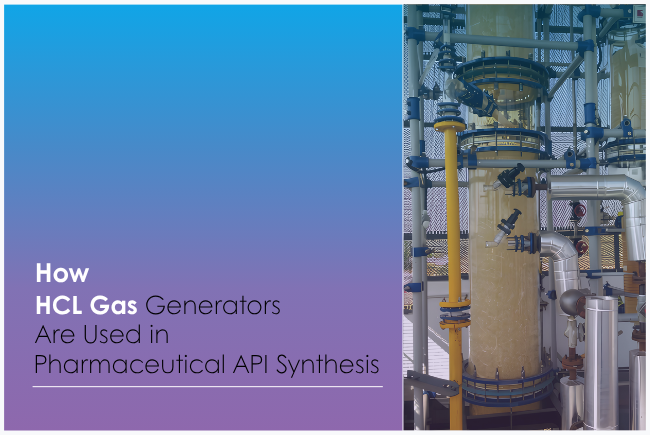
Anhydrous Hydrogen Chloride (HCl) gas is used in pharmaceutical API synthesis, mainly for salt formation, acid-catalysed reactions, and deprotection. A common question among laboratory professionals is, how does a hydrogen chloride gas generator work? These systems generate dry HCl gas on demand in a closed setup, eliminating the need for compressed gas cylinders and providing better control over gas flow and purity. In pharmaceutical manufacturing, where consistency and process control are important, hydrogen chloride gas generators offer a reliable and efficient solution for handling anhydrous HCl.
What is a Hydrogen Chloride Gas Generator?
An HCl Gas Generator is a specialised glass system designed to produce dry hydrogen chloride gas through a controlled chemical reaction. The generated gas is dried and supplied directly to the process where it is required. It allows laboratories and production facilities to produce HCl gas safely without storing large quantities of compressed gas on site. The gas produced is used in pharmaceutical, chemical, and research applications where moisture-free hydrogen chloride is important for reaction performance.
How Dry Hydrogen Chloride Gas Is Produced
The hydrogen chloride gas generator working principle is based on the reaction between concentrated sulphuric acid and hydrochloric acid. When sulphuric acid is added gradually to hydrochloric acid, hydrogen chloride gas is released. Since the reaction generates heat, the acid addition rate is carefully controlled to maintain a steady and safe gas flow.
The generated gas passes through a drying column containing concentrated sulphuric acid, which removes any residual moisture before the gas reaches the process reactor. It lets operators maintain consistent gas quality and flow rates, which are required for achieving reliable results in API manufacturing.
Working of Hydrogen Chloride Gas Generator
To better understand how does a hydrogen chloride gas generator works, it is useful to know the operating cycle. First, the generator vessel is charged with hydrochloric acid, while concentrated sulphuric acid is placed in a dropping funnel. As the sulphuric acid is introduced at a controlled rate, hydrogen chloride gas is produced and directed through the drying section.
The dried gas then flows into the synthesis reactor, where it participates in the required chemical process. Operators can adjust the gas generation rate by controlling the rate of sulphuric acid addition. Once the required quantity of HCl has been delivered, the system can be safely shut down and purged using an inert gas such as nitrogen.
Uses of HCl Gas Generator in Pharmaceutical API Synthesis
There are several important uses of HCl gas generators across pharmaceutical, chemical, and research environments. By producing dry hydrogen chloride gas on demand, these systems help maintain process efficiency while reducing the challenges associated with compressed gas cylinders.
- Generation of Dry HCl Gas for Synthetic Chemistry: Produces dry HCl gas for synthetic chemistry and moisture-sensitive reactions.
- Research and Pilot-Scale Applications: Support controlled HCl gas supply in R&D laboratories and pilot-scale facilities.
- Conversion of Aqueous HCl into Gas Form: Converts commercial aqueous hydrochloric acid into dry HCl gas for specialised processes.
- Supply to Downstream Processes: Delivers HCl gas to downstream reactors and gas-phase processing systems.
- Integration into Technical Package Systems: Integrates into glass-based gas feed modules used in pharmaceutical and chemical processing operations.
Features such as automated feed control, temperature monitoring, gas containment systems, and high-quality borosilicate glass construction support safe and reliable operation across laboratory, pilot-scale, and production environments.
Safety Considerations While Using HCl Gas
Anhydrous hydrogen chloride is corrosive and highly toxic by inhalation. Therefore, gas-generation equipment must be designed and operated with appropriate safeguards, such as:
- Using the generator inside a properly functioning fume hood.
- Using borosilicate glass equipment designed for corrosive chemical service.
- Installing a scrubber system to neutralise excess gas before release.
- Monitoring the system for pressure build-up or blockages.
- Providing emergency shut-off and inert gas purge facilities.
- Wear suitable personal protective equipment, including gloves, eye protection, and face shields.
Importance of Material Selection and Design
Hydrogen chloride gas generators are exposed to highly corrosive chemicals and demanding operating conditions. As a result, equipment quality plays an important role in long-term performance and safety. Borosilicate 3.3 glass is widely preferred for its excellent resistance to acids and thermal stress, as quality construction also helps minimise leakage risks and supports reliable operation over extended periods.
At Goel Scientific Glass Works Ltd., we offer HCL Gas Generator systems for laboratory, pilot-scale, and production applications. Our systems are made using certified borosilicate glass and undergo rigorous quality checks to meet the requirements of pharmaceutical and chemical processing environments.
Conclusion
Hydrogen chloride gas generators provide a practical and efficient alternative to compressed gas cylinders for pharmaceutical API synthesis. They allow laboratories to generate dry HCl gas on demand, improve process control, and reduce the challenges associated with gas storage and handling. When manufactured from high-quality borosilicate glass, these systems offer dependable performance and long-term reliability for pharmaceutical and chemical processing applications.
Reliable equipment is important for maintaining safety and consistency in HCl-based processes.
Explore Goel Scientific Glass Works Ltd.’s HCl Gas Generators made for laboratory and industrial applications.
FAQs
Hydrogen chloride gas generators are suitable for laboratory research, pilot plants, and larger process development activities. They are available in different capacities and can be selected based on the required gas output and application needs.
Many pharmaceutical reactions are sensitive to moisture. Dry hydrogen chloride gas helps maintain reaction conditions without introducing water, which can affect product quality or lead to unwanted by-products.
On-demand generation reduces the need to store compressed gas cylinders, simplifies handling, and provides better control over gas flow. It also allows operators to produce only the amount of gas required for a specific process.
At Goel Scientific Glass Works Ltd., we offer customised HCl Gas Generator configurations based on process requirements, including reactor size, gas output capacity, and drying systems. It also includes additional safety features for specialised pharmaceutical or chemical applications.
Proper training is important for using hydrogen chloride gas generators as it helps operators understand system controls, safety procedures, emergency protocols, and maintenance requirements. Well-trained personnel can operate the equipment more safely and efficiently while reducing the risk of operational errors.
