




- GOEL Scientific
- September 18, 2026
- PTFE Coupling Gasket
- 0 Comments
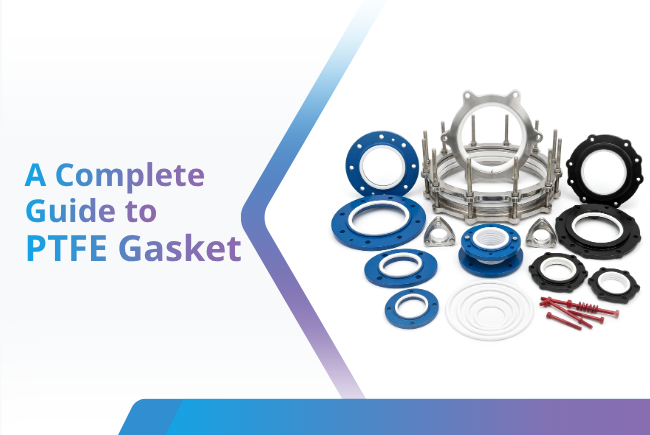
A single failed seal in a high-purity chemical line can shut down an entire production batch, release toxic fumes or cause costly equipment damage. In aggressive environments handling strong acids, solvents or reactive media, standard elastomeric seals quickly degrade, harden or leach impurities. This is where the PTFE gasket serves as an indispensable sealing solution. Known for near-universal chemical inertness and reliable performance under thermal stress, selecting the right gasket configuration requires understanding key PTFE gasket material properties, structural designs and operating limits.
Understanding the Material Basics
Polytetrafluoroethylene (PTFE) is a synthetic fluoropolymer composed of carbon and fluorine atoms. The strong carbon-fluorine bonds give the material its distinct chemical and physical stability. When manufactured into a PTFE gasket, this fluoropolymer creates an impenetrable barrier against aggressive process fluids.
Unlike standard plastics or elastomers, PTFE does not absorb moisture, melt under moderate thermal exposure or react with organic solvents. Its low coefficient of friction also prevents sticking during disassembly, making it ideal for modular processing systems that require frequent cleaning, inspection or reconfiguration.
Key PTFE Gasket Material Properties: Chemical & Thermal Resilience
Engineers select PTFE when standard elastomeric or metallic seals fail. The foundational PTFE gasket material properties that drive industrial adoption include:
- Universal Chemical Resistance: Unaffected by concentrated acids, strong alkalis, halogens and organic solvents across the entire pH scale (0–14), except for molten alkali metals and elemental fluorine at high temperatures.
- Non-Contaminating Surface: Free of plasticisers and additives, preventing trace leaching into high-purity pharmaceutical or food-grade media.
- Hydrophobic and Non-Stick: Resists water absorption, media adhesion and scaling, simplifying clean-in-place (CIP) and sterilise-in-place (SIP) validation.
- Dielectric Strength: Provides excellent electrical insulation across a wide frequency range.
- Low Coefficient of Friction: Ensures easy installation and residue-free removal during maintenance overhauls.
Temperature and Pressure: Understanding the PTFE Gasket Temperature Range
Operating boundaries depend directly on system thermal and mechanical conditions. The standard PTFE gasket temperature range typically spans from cryogenic levels as low as -200°C up to continuous service limits near +260°C.
| Operating Parameter | Standard Virgin PTFE Limits | Application Notes |
| Minimum Temperature | -200°C | Retains flexibility in cryogenic fluid transfer. |
| Maximum Continuous Temp | +260°C | Thermal degradation occurs above 315°C. |
| Pressure Limits (Vacuum) | Full Vacuum (10⁻² Torr) | Requires proper flange seating and backing support. |
| Pressure Limits (Positive) | Vacuum to ~40 bar | Depends on flange design, bolt torque and reinforcement. |
PTFE vs Rubber Gaskets
Selecting between a PTFE vs rubber gasket comes down to balancing mechanical elasticity against chemical and thermal resistance.
| Feature | Rubber Gaskets (EPDM, Nitrile, Viton) | PTFE Gasket |
| Flexibility | High elasticity and easy sealing | Less flexible |
| Bolt Torque | Seals effectively with lower torque | Requires more precise torque |
| Chemical Resistance | Can swell or degrade with aggressive solvents | High resistance to aggressive chemicals |
| Heat Resistance | Can harden or degrade under extreme heat | Excellent thermal endurance |
| Best Suited For | General-purpose sealing applications | Aggressive chemicals and demanding conditions |
Common PTFE Gasket Applications in Chemical & Pharma Industries
Because of its chemical stability, PTFE gasket applications span numerous demanding industrial sectors:
- Pharmaceutical Synthesis: Seals reactor headers, addition lines and purification columns where elemental purity is paramount.
- Chemical Processing: Protects acid transfer pipelines, chlorine gas scrubbers and solvent recovery systems from corrosion.
- Petrochemical Refining: Manages volatile hydrocarbon streams and acid-catalyst feed lines under continuous thermal cycles.
- High-Purity Utilities: Serves as sanitary seals in steam lines, deionised water systems and sterile processing blocks.
PTFE Gaskets for Glass-Lined & Industrial Glass Systems
Glass piping and reactors present unique sealing challenges. Because borosilicate glass and glass-lined steel flanges cannot withstand excessive bolt torque without cracking, specialised PTFE components are required to maintain a leak-tight seal at lower compressive loads.
PTFE O-Rings with Locking Collar
The PTFE O-ring with locking collar features a mechanical locating flange that holds the seal precisely aligned on the glass end during assembly. This design eliminates misalignment risks, ensures consistent seal placement and simplifies coupling assembly in modular glassware systems where operator handling might otherwise displace a standard gasket.
PTFE Bellows (Glass-to-Glass)
Installed directly between glass segments, PTFE bellows absorb mechanical vibration, correct angular or linear misalignment and accommodate thermal expansion. Offered with matching bellow flanges, nut-bolt sets and distance-locking bolts to prevent over-compression, these convoluted structures provide integral sealing without requiring separate flat gaskets. For vacuum operations in sizes DN 80 and above, internal support sleeves prevent wall collapse. These ptfe bellows glass to glass assemblies are equally available as ptfe bellows glass to metals configurations for transitions between glass and metallic process equipment.
Glass Coupling Systems
In high-duty industrial glass installations, Goel Scientific Glass Works Ltd. incorporates these specialised PTFE bellows, envelope gaskets and engineered couplings into complete borosilicate 3.3 glass assemblies. By pairing inert PTFE sealing components with metal backing flanges (conforming to DIN, ASA or custom patterns), these coupling systems deliver leak-free vacuum and pressure continuity while shielding delicate glass components from destructive mechanical bending stresses.
The Expert Gasket Selection Guide: 5 Steps to the Right Choice
Follow this practical gasket selection guide to match the correct seal to your process parameters:
- Identify Media Compatibility: Confirm that the process fluid, concentration, and potential side reactions match the gasket material (Virgin PTFE for purity, Filled for mechanical strength).
- Evaluate Operating Temperature: Verify that normal operating temperatures and potential thermal spikes fall within the target PTFE gasket temperature range.
- Check System Pressure and Vacuum: Use expanded PTFE (ePTFE) or envelope designs for low-torque, fragile flanges and filled PTFE for high-pressure steel pipelines.
- Determine Flange Type and Surface Finish: Match gasket compressibility to the flange material. Delicate borosilicate glass requires soft ePTFE or collar-aligned O-rings, whereas flat steel flanges accept standard cut sheets.
- Confirm Dimensional and Alignment Specs: Ensure correct inner/outer diameter fit and verify if mechanical alignment features, such as locking collars, are needed to streamline assembly.
Conclusion
Choosing the correct gasket material and geometry ensures continuous plant safety, regulatory compliance and process purity. Whether you are running aggressive chemical distillations or high-purity pharmaceutical synthesis, matching your operating conditions to the right PTFE variant prevents costly downtime.
Goel Scientific Glass Works Ltd. engineers high-purity borosilicate 3.3 glass process systems, specialised couplings, PTFE bellows glass to glass and custom glass-sealing components tailored to your exact process parameters. Contact our technical team today to consult on custom gasket selection or request a quote for your facility.
FAQs
Standard virgin PTFE gaskets operate reliably from cryogenic temperatures (-200°C) up to continuous elevated temperatures of +260°C.
Choose PTFE when handling aggressive chemicals, strong solvents, extreme temperatures or high-purity pharmaceutical media where leaching must be avoided. Choose rubber gaskets for low-temperature water, air or mild chemical applications that require high elasticity at low bolt torque.
Yes. Virgin PTFE is chemically inert, non-toxic and free of plasticisers, meeting strict FDA and sanitary requirements for food, beverage and active pharmaceutical ingredient (API) processing.
Unfilled virgin PTFE can slowly deform under constant compressive load, known as cold flow or creep. Using filled or expanded PTFE (ePTFE) and employing spring-loaded flange bolts prevents torque loss and weeping.
